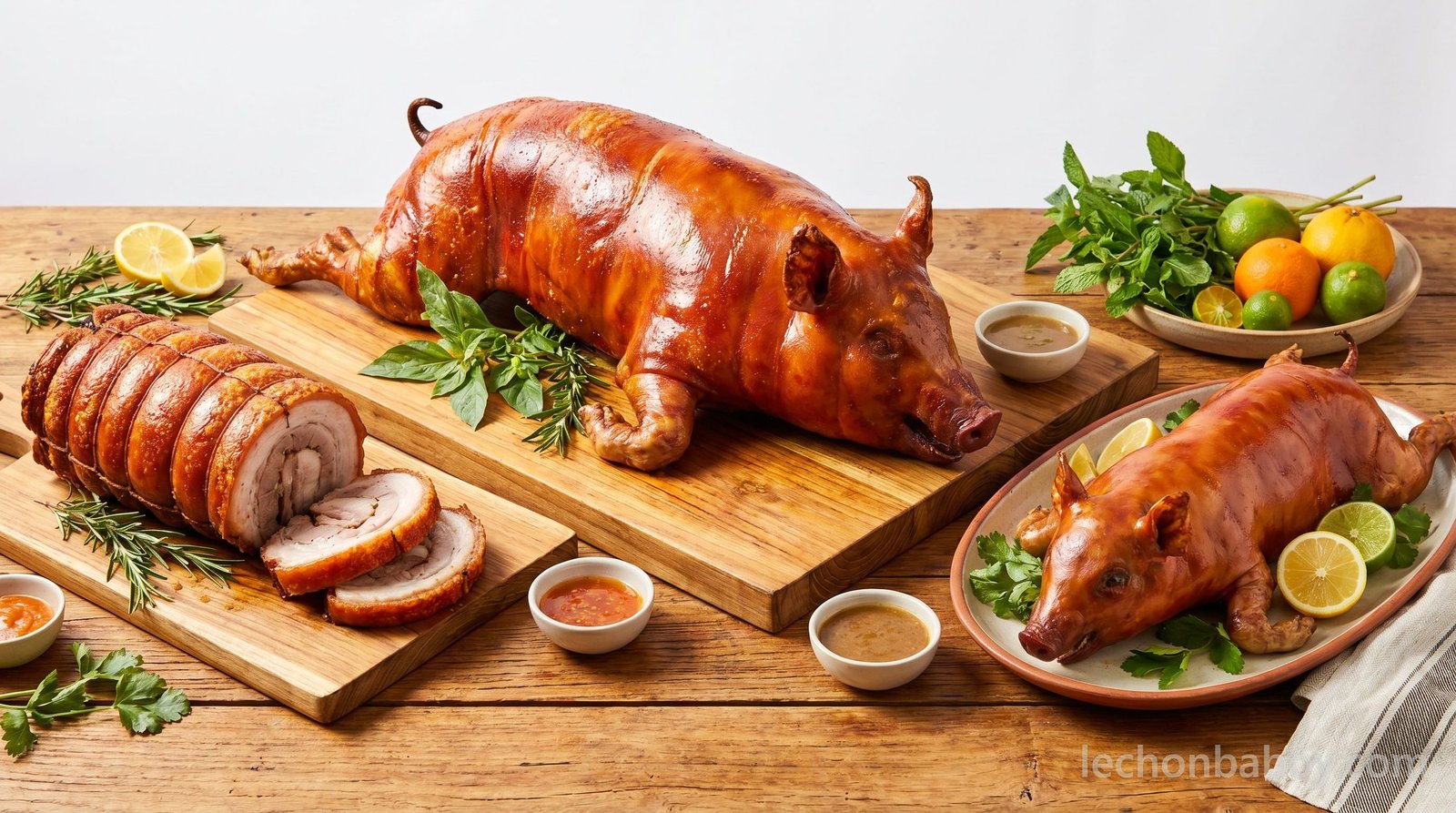
"Lechon" just means roasted — so the word covers a whole range of dishes. These are the four you'll actually be choosing between, and what each is best for.
| Type | What it is | Best for |
|---|---|---|
| Lechon baboy | Whole roasted pig | Big parties & fiestas — the showstopper |
| Lechon belly | Rolled, boneless pork belly | Small–mid groups; crackling on every slice |
| Lechon de leche | Small milk-fed suckling pig | Intimate, premium occasions; tender meat |
| Lechon manok | Roasted chicken | Everyday meals; budget; not a party centerpiece |
Whole lechon baboy
The classic — a whole pig roasted until the skin crackles, carved or chopped for a crowd. Nothing else delivers the same centerpiece drama. Scales from small to jumbo; see how much per person.
Lechon belly
One cut, rolled and roasted, sliced into rounds. Maximum skin-to-meat ratio and easy to serve — the smart pick when a whole pig is too much. Full breakdown in the lechon belly guide.
Lechon de leche
A young suckling pig: very tender meat, fine delicate skin, smaller yield, premium price. Best when texture matters more than feeding a crowd. See the de leche guide.
Lechon manok
Roasted chicken — a different bird entirely (literally). It's an everyday, affordable meal rather than a celebration centerpiece, so it rarely competes with a whole pig for a party. Worth knowing the term exists so you order what you actually mean.
Crowd? Lechon baboy. Small group, lots of crackling? Lechon belly. Tender & special? De leche. Weeknight dinner? Lechon manok.