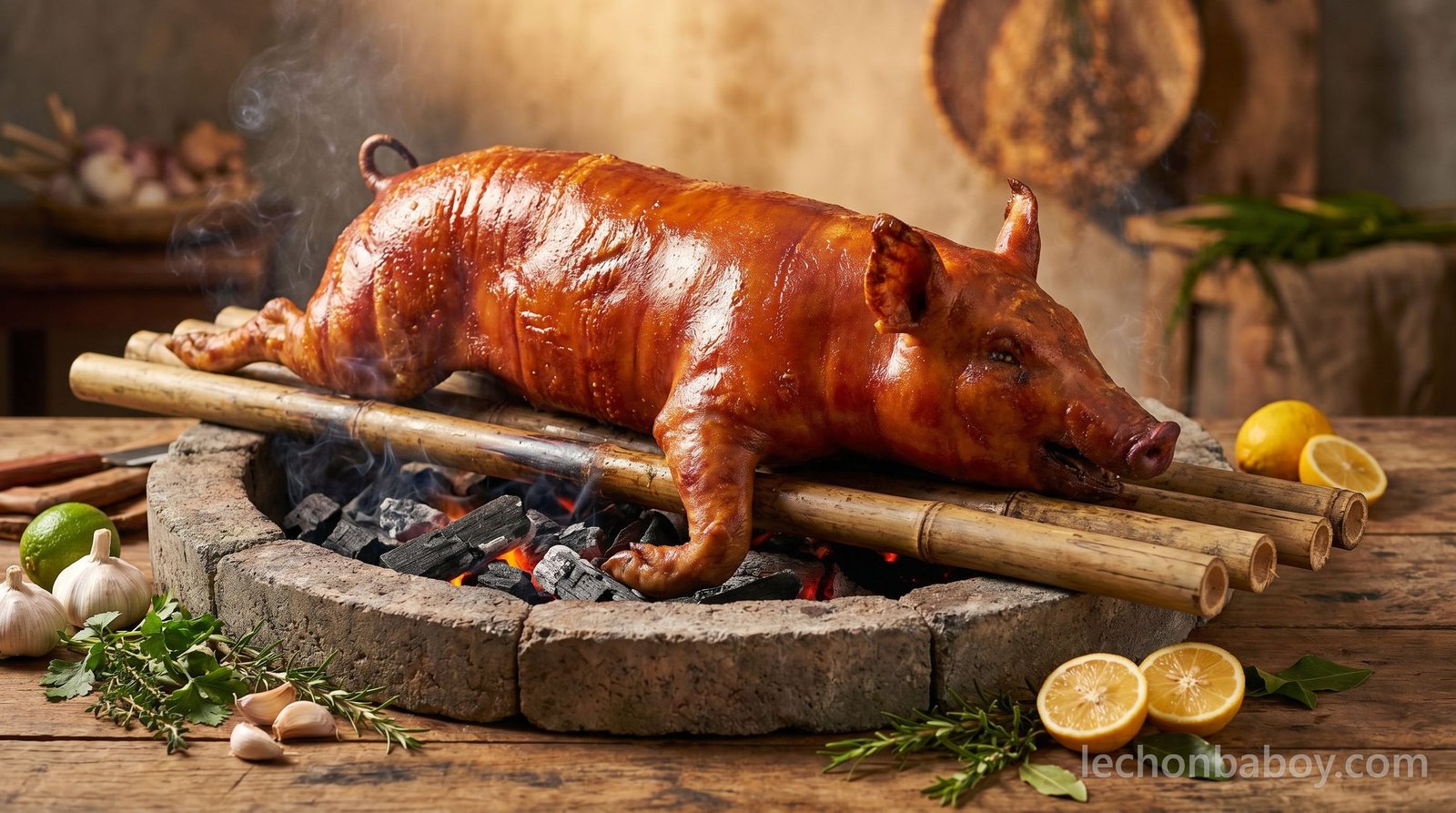
Filipinos were roasting whole pigs over fire long before the Spanish arrived. What the colonizers really added was a name — lechón, the Spanish word for a roasted suckling pig — which is how the practice came to be called what it is today.
The roasting came first, the name came later
Roasting pig over coals is ancient across the islands and predates colonization — it was already part of feasts and rituals. When the Spanish came, their word lechón (a roast suckling pig) attached itself to the practice, and over time the dish grew from the small suckling pig (preserved today as lechon de leche) to the full-grown pig that now anchors a fiesta — stuffed with local aromatics like lemongrass and cooked over charcoal.
Why it's the fiesta dish
Lechon is built for celebration. It's communal — one pig feeds a crowd — and it's spectacular, carried out whole and golden to gasps and phone cameras. In a culture where hospitality and the handaan (feast) are central, the most generous thing a host can put on the table is a whole roasted pig. That's why it appears at birthdays, weddings, baptisms, town fiestas, and above all at Christmas.
One pig, a hundred phones, and a whole party gathered around the crackling.
How Cebu earned its name
Among the regions, Cebu became the most famous, building its reputation on lechon seasoned heavily from the inside — lemongrass and aromatics packed into the cavity — so the meat needs no sauce. International food media has repeatedly singled out Cebu lechon as some of the best roast pig anywhere, cementing its status as the benchmark other regions are measured against. (More on the regional split in Cebu vs Luzon.)
Lechon today
The dish keeps evolving. Many roasters now use gas or electric ovens and rotisseries alongside the traditional charcoal spit, and newer formats like lechon belly have made the experience accessible for smaller gatherings and home kitchens. The ceremony, though, hasn't changed — a whole lechon still stops a room.