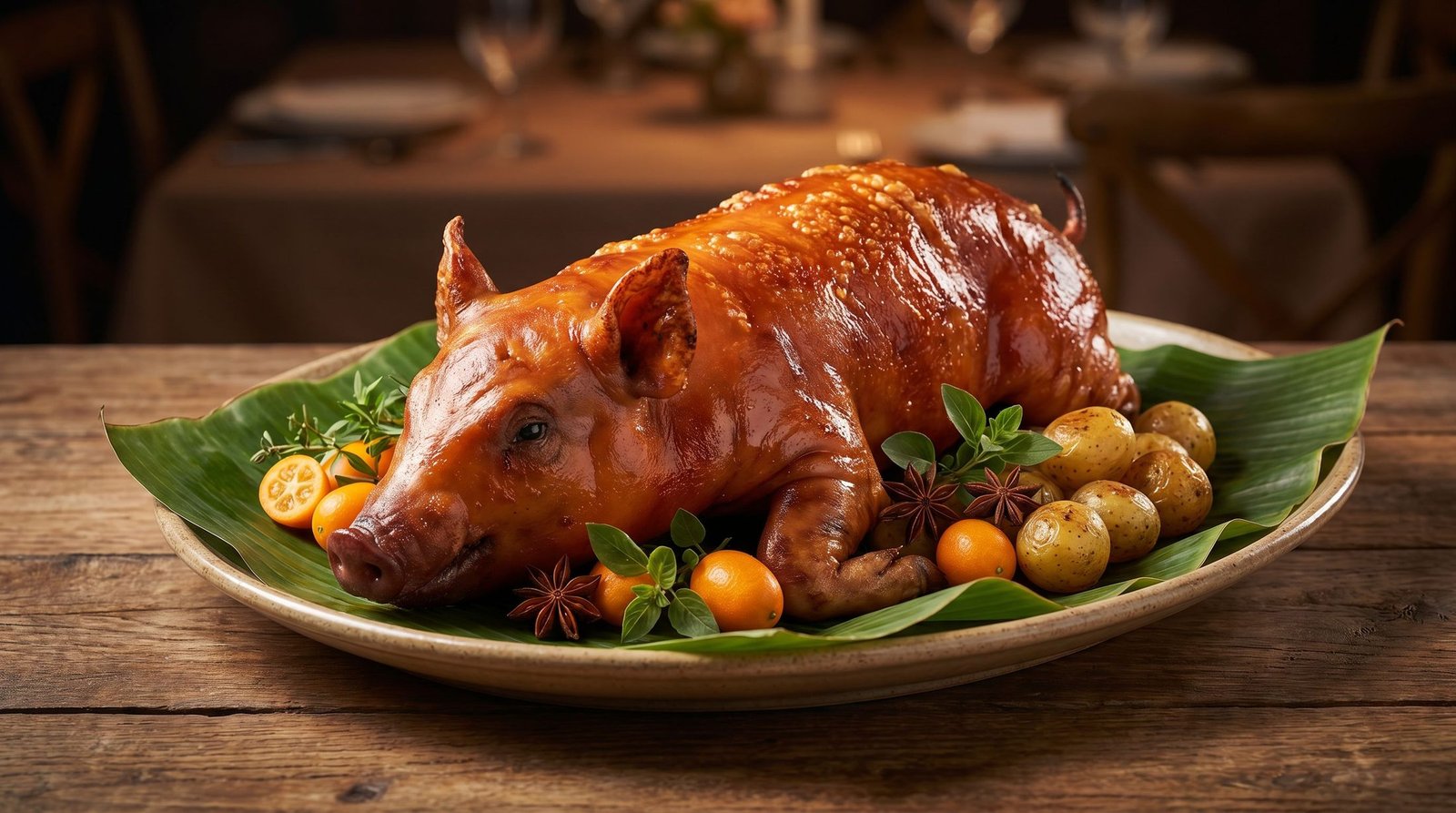
"De leche" means "of milk" — a young, milk-fed suckling pig. Because the animal is small and tender to begin with, the meat comes out exceptionally soft and the skin extra thin and delicate. It's the lechon you order when you want something a little special.
Why it tastes different
A suckling pig has less fat and more delicate muscle than a full-grown one, so lechon de leche reads as tender and mild rather than rich and chewy. The skin crisps into a fine, almost glassy sheet instead of the thicker crackling of a big pig. Fans love it for the texture; the trade-off is that there's simply less of it.
How many does it feed?
Because the pig is small, a lechon de leche suits intimate gatherings rather than fiestas — think a family dinner or a small celebration. If you're feeding a crowd, you'll either need several or you'll want a standard whole lechon instead. Use the size calculator to sanity-check headcount, and remember de leche yields less cooked meat per pig than a full-size lechon.
When it's worth it
- Tenderness is the point — guests who find regular lechon too chewy.
- Smaller, special occasions — an anniversary, a small Noche Buena, a milestone dinner.
- A refined presentation — a whole little pig makes a striking centerpiece on a small table.
The catch
You pay for tenderness, not volume. Lechon de leche generally costs more per kilo of meat than a standard lechon, and feeds fewer people. For big crowds on a budget, a regular whole lechon is the better value — save de leche for when texture matters most.