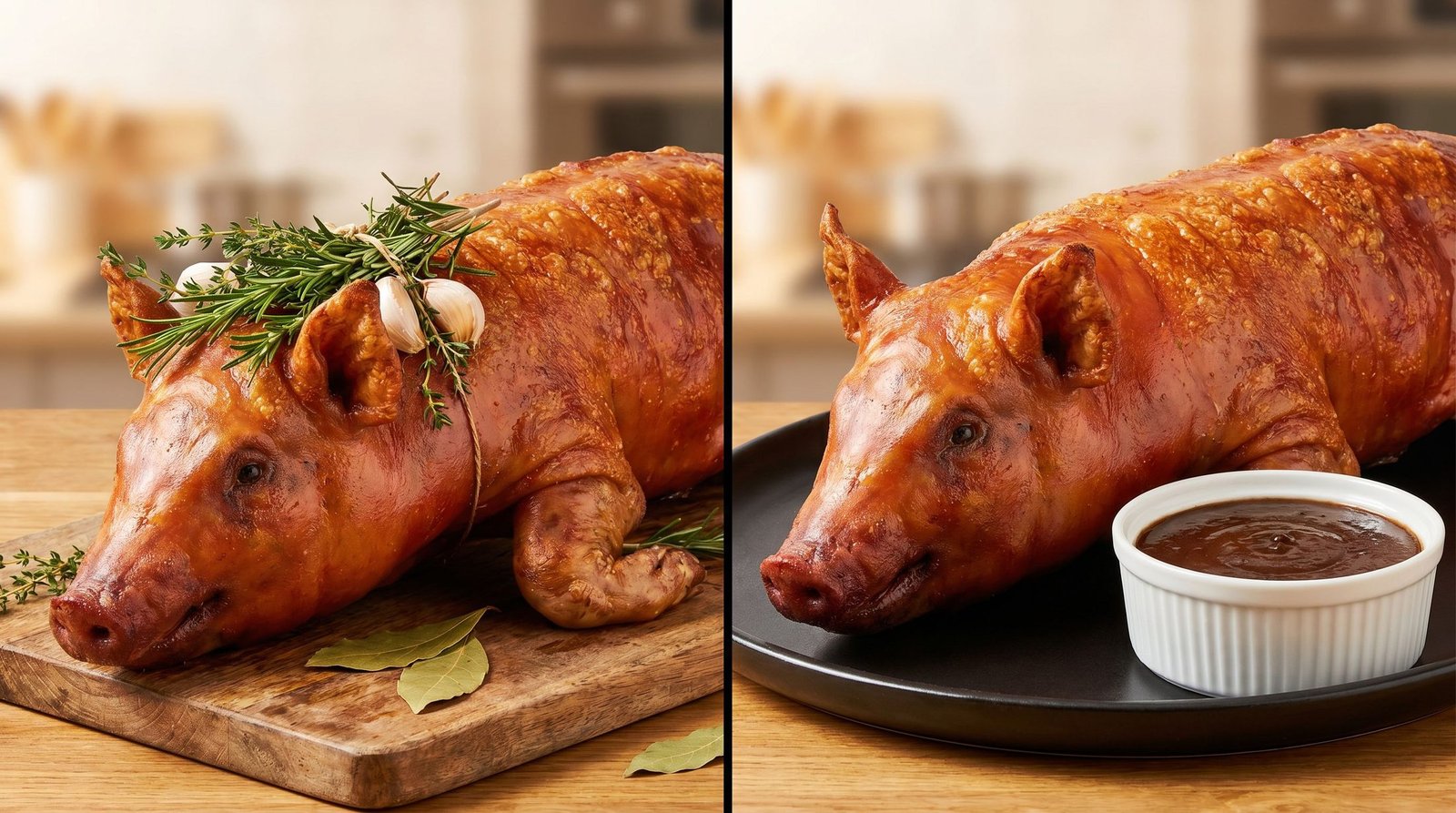
The big divide in Filipino lechon runs roughly between Cebu and Luzon. The difference isn't the pig — it's what goes inside it, and what goes on top.
Cebu-style: seasoned from the inside
Cebu lechon is stuffed before roasting — lemongrass (tanglad), garlic, onion, spring onion, bay leaf, peppercorns and other aromatics packed into the cavity so the flavour cooks into the meat. The result is savoury and fragrant enough to eat on its own, which is exactly how Cebuanos serve it: no sauce, maybe a little spiced vinegar on the side. Cebu's lechon built its national reputation on this — well-seasoned meat and a famously crisp skin.
Luzon-style: plainer meat, sweet liver sauce
Luzon (and Manila) lechon is typically seasoned more simply, with the flavour built at the table rather than in the cavity. The classic partner is a thick, sweet-savoury liver sauce — the bottled Mang Tomas "all-around sauce" is the shorthand most people know. The meat is the canvas; the sauce is the paint.
Side by side
| Cebu-style | Luzon / Manila-style | |
|---|---|---|
| Seasoning | Stuffed with lemongrass & aromatics | Simpler; flavour added at the table |
| Sauce | Usually none; spiced vinegar optional | Sweet liver sauce (Mang Tomas) |
| Flavour | Herby, savoury, eat-as-is | Milder meat, sauce-led |
| Reputation | The benchmark for crisp skin | The everyday party standard |
So which should you get?
If you want lechon that stands on its own and you love a herby, savoury bite, go Cebu-style. If your crowd grew up dipping every slice in sweet sauce, Luzon-style will feel like home. Many sellers in Metro Manila now offer a Cebu-style option alongside the classic — so you can simply ask which they do, and whether sauce is included.
It's not about crispiness. Both styles can have shatteringly crisp skin — that comes down to the roaster, not the region. Choose on flavour: seasoned-through vs. sauce-forward.